


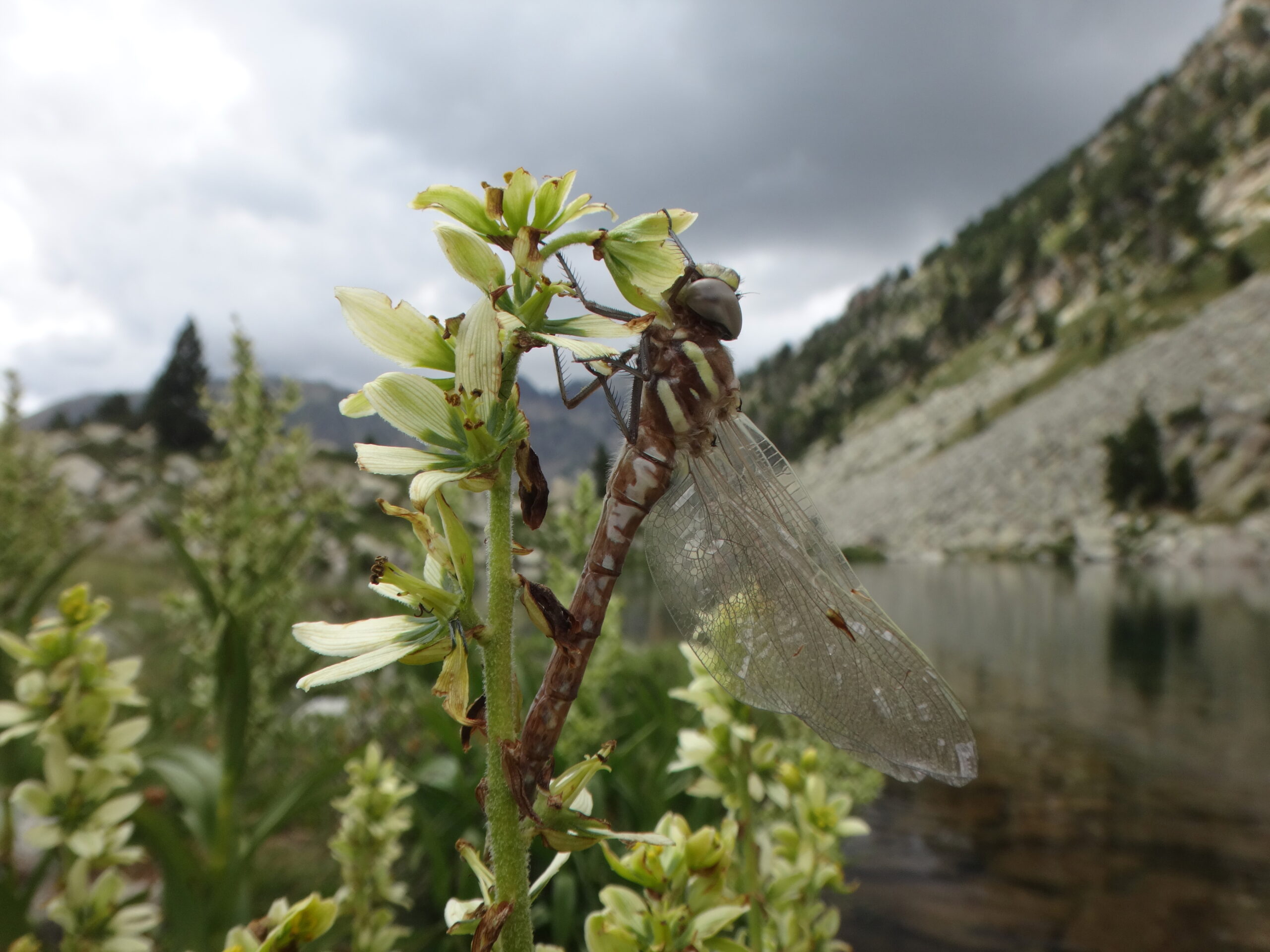
Many high mountain lakes were originally fishless. However, in recent decades, fish have been introduced into these lakes for recreational fishing. This brought unexpected consequences for the ecosystem, affecting not only aquatic life but also animals on land.
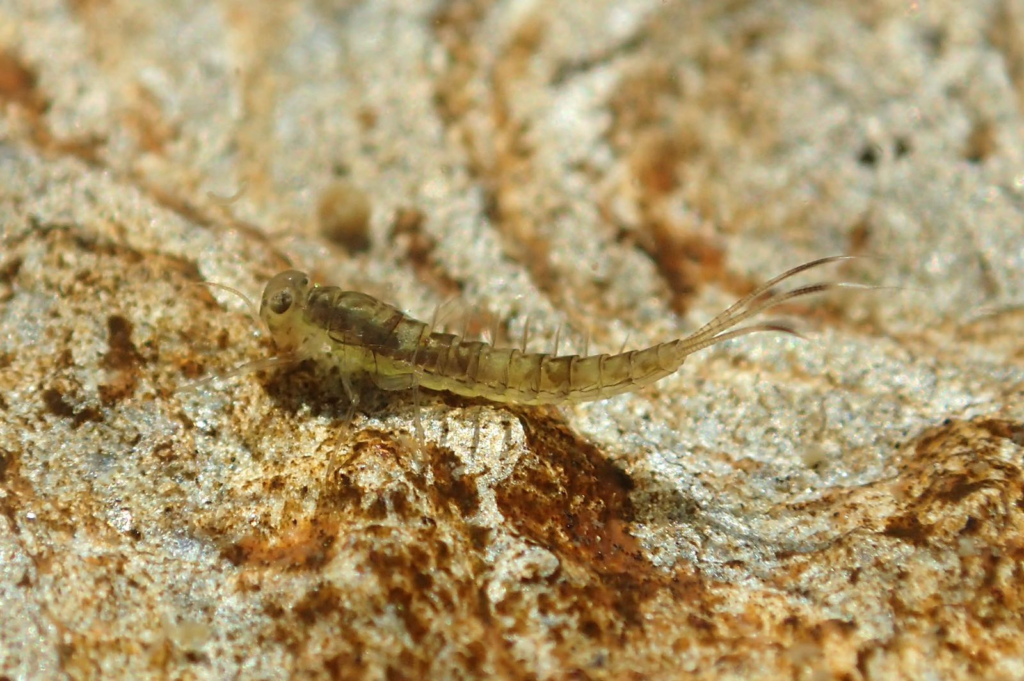
The insects that inhabit lakes are often larval stages that will metamorphosize and eventually emerge as flying adults. On land they are a vital food source for many terrestrial animals living around the lakes. Fish heavily predate on insect larvae, consequently reducing the number of insects that make it out of the water. This could result in less food for insectivores, such as spiders, predatory beetles and centipedes that live around these lakes.
As a part of the Life RESQUE ALPYR project, we studied 12 high mountain lakes in the Western Italian Alps. Four lakes were fishless, four lakes were undergoing fish removal, and four still had established fish populations. We placed traps near the lakes shore and farther away to capture ground-dwelling invertebrates, and we also sampled insect larvae to assess the prey availability, i.e. emerging insects.
What did we find?
Compared to lakes with fish, fishless lakes had much more emerging aquatic insects, confirming that fish reduce an important food source for animals on land. We also found more ground-dwelling predators near the lake shoreline, suggesting their habitat preference and importance of lake insects as a food source.
Interestingly, we didn’t observe any big differences in ground-dwelling predator numbers between lakes with and without fish. This suggests that while aquatic insects play a role in shaping nearby terrestrial communities, other factors may also influence predator abundance, and that more lakes are needed in future studies to get a clear picture of this relationship.
Although more research is needed to fully understand the impact of introduced fish on ground dwelling predators, our study highlights the important connection between lake and surrounding land ecosystems. Changes in one environment often trigger to responses in the other and understanding these relationships is essential in designing effective conservation strategies for these unique high mountain areas.
This news results from the Master’s Degree Project in Biology (2025) by Gea Lukšić (Department of Biology, Lund University), carried out under the guidance and supervision of Rocco Tiberti and Lucia Bello (Department of Biology, Ecology and Earth Sciences (DiBEST), University of Calabria) and Anders Persson, Department of Biology (Lund University).
