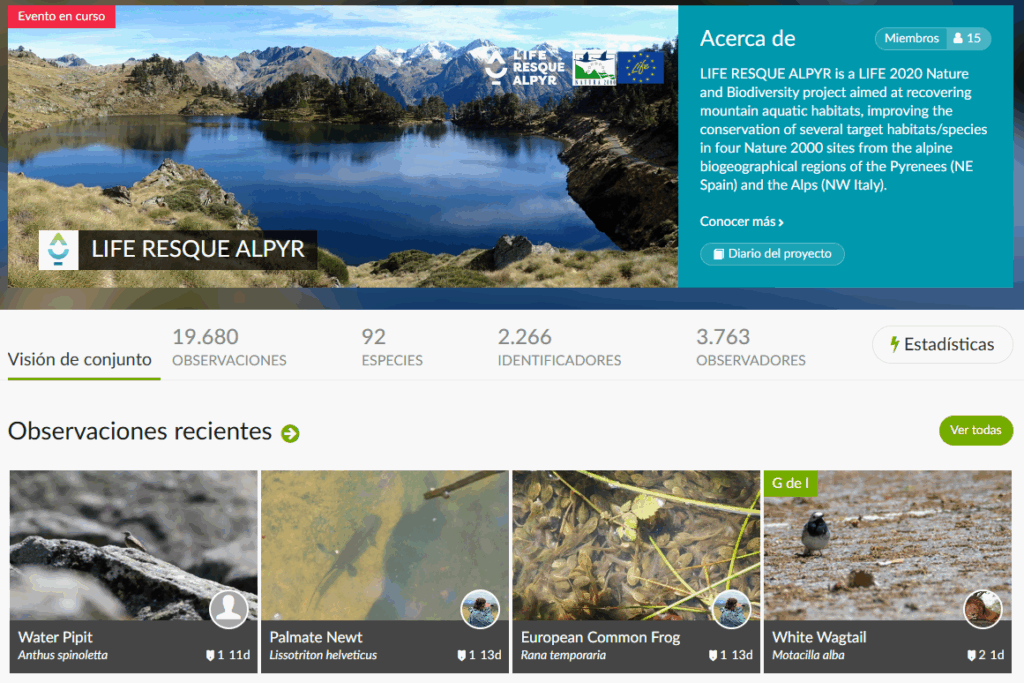
We’re launching a new call to citizens to help conserve the high mountain aquatic ecosystems of the Pyrenees and the Alps. This time, we invite everyone visiting these areas to take part in the LIFE RESQUE ALPYR citizen science project through the iNaturalist platform.
Explore, observe, and collaborate — these are the three key steps to becoming a vital part of the project. Thanks to your observations of aquatic flora and fauna in high mountain lakes, we can gather essential data to better understand these fragile and protected ecosystems and apply improved conservation strategies.
How to participate
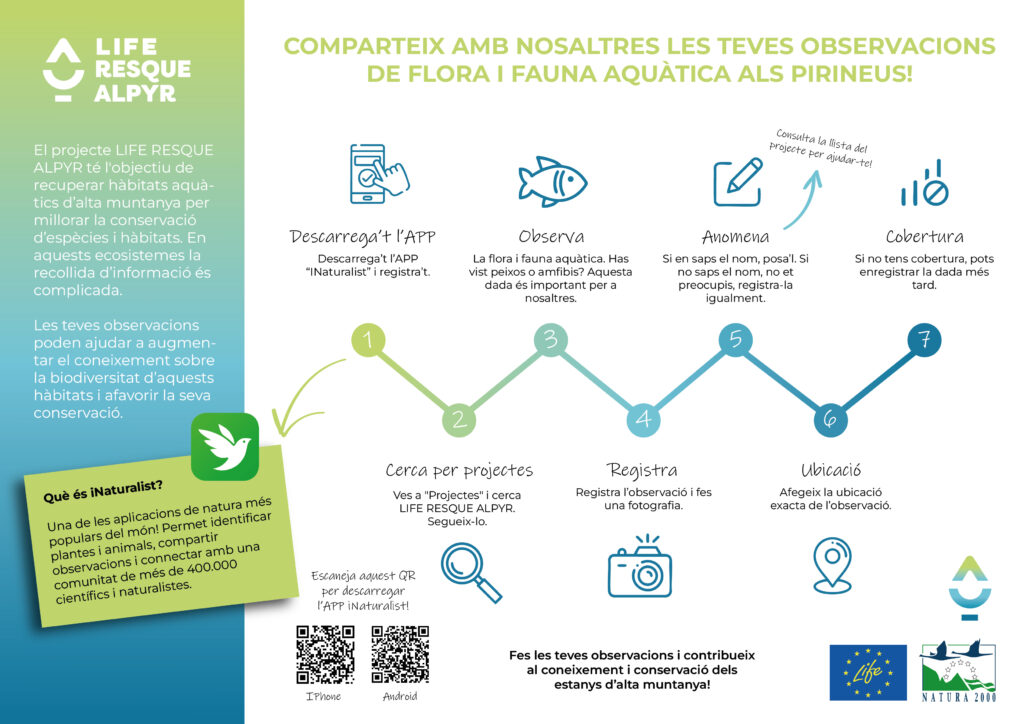
Taking part is easy — all you need is a mobile device and the desire to contribute to science:
- Download the iNaturalist app (available for iOS and Android).
- Create an account and search for the project: LIFE RESQUE ALPYR.
- Observe aquatic flora and fauna in high mountain lakes.
- Take a photo and upload your observation. For our research, fish and amphibians are especially valuable!
- Add the species name if you know it (if not, the iNaturalist community will help).
- Include the exact location — if you don’t have coverage, you can save the data and upload it later.
To make it even easier, we’ve prepared a visual guide infographic explaining all the steps clearly. You can download (horizontal or vertical) or view it here.
Why your participation matters
Observing and collecting data in high mountain environments is not easy. But with your help, we can overcome this challenge and gather valuable information on priority species and habitats — especially those located in Natura 2000 areas.
This shared knowledge helps us make better decisions for biodiversity conservation and strengthens the connection between science and society.
Join the LIFE RESQUE ALPYR project on iNaturalist!
With each observation, you actively contribute to protecting some of the most spectacular and vulnerable landscapes in Europe.
Turn your visit to mountain lakes into a scientific action!