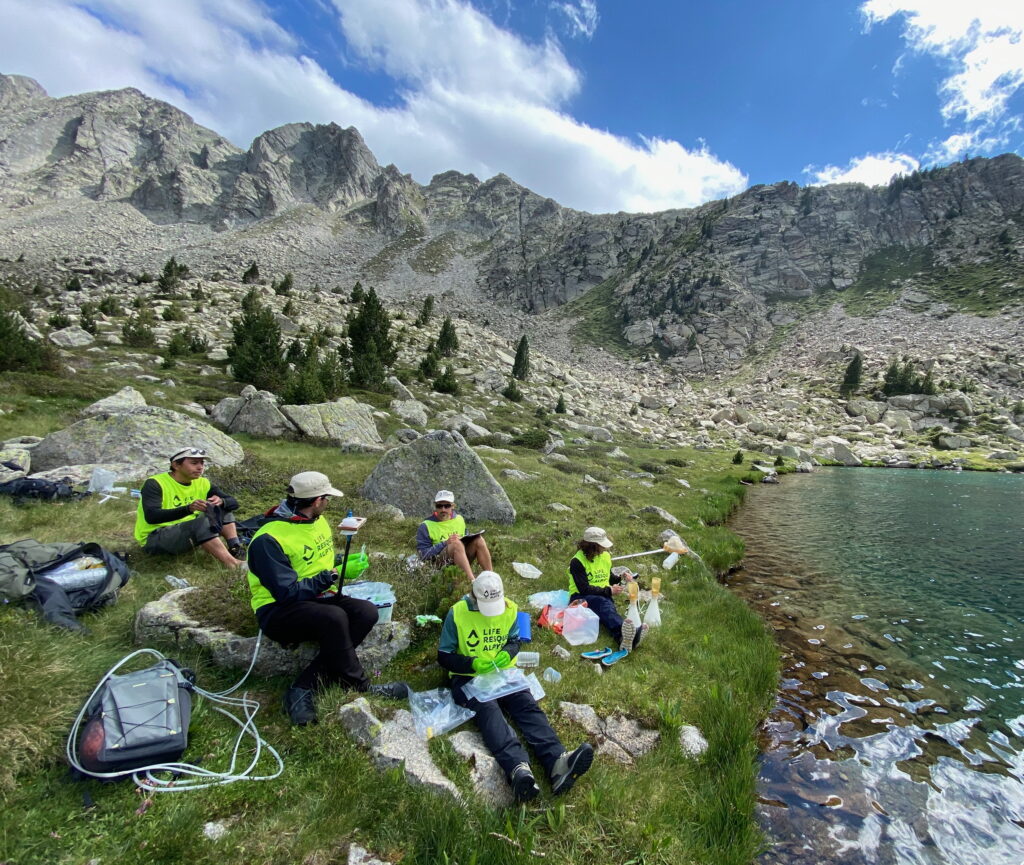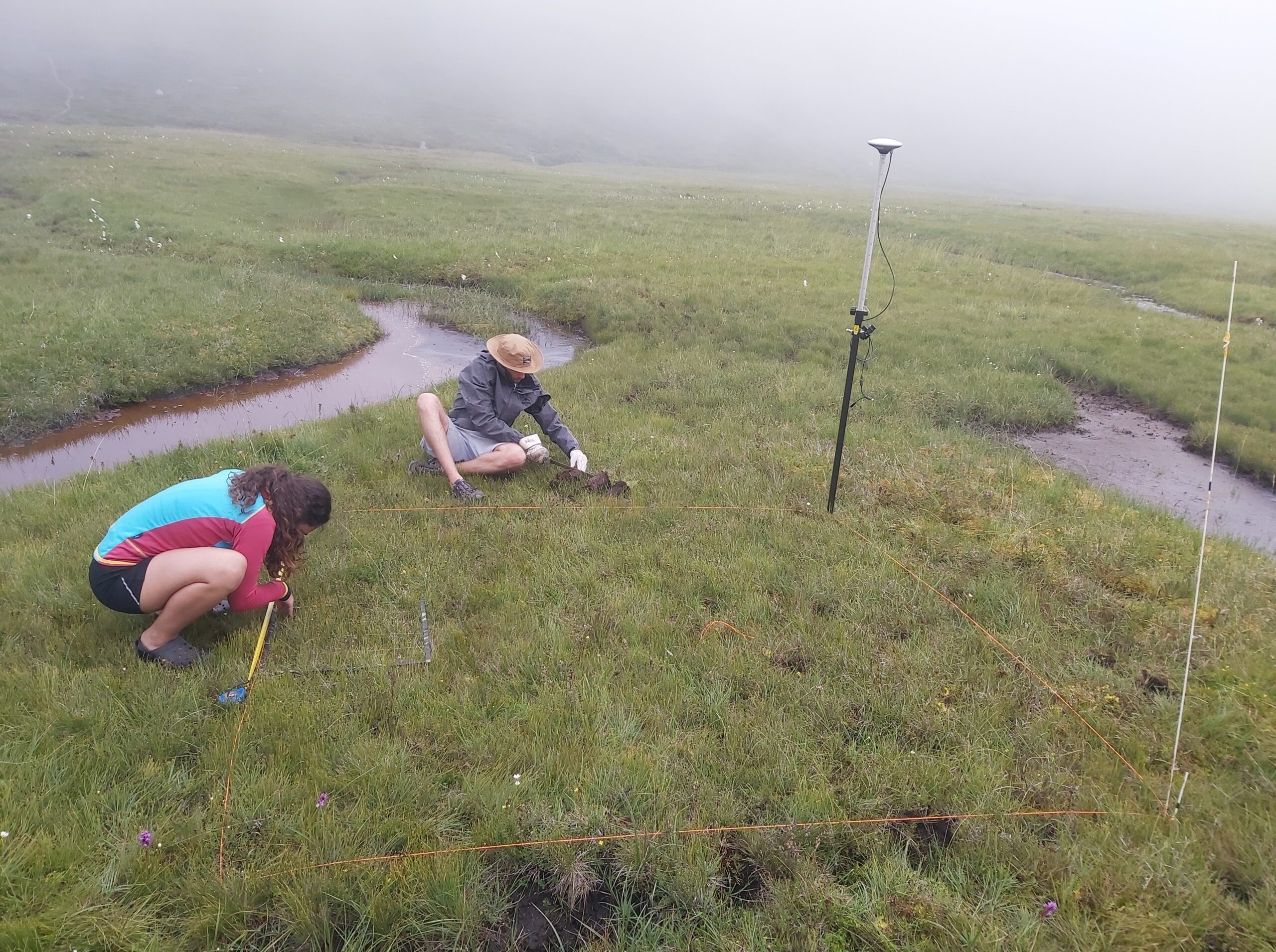
This year, the teams of biologists from the University of Barcelona and University of Pavia have continued monitoring all the permanent plots in the ten mires where management and restoration actions have been carried out within the LIFE RESQUE ALPYR project. These mires are located within the Aigüestortes i Estany de Sant Maurici National Park (PNAESM), the Alt Pirineu Natural Park (PNAP), the Aran Valley (Aran) and Gran Paradiso National Park (GPNP).
In four of them, livestock exclusion fences were installed in 2023 to protect them from overgrazing, mainly by cows and mares: Estanyeres de Son (PNAESM), Plan deth Horn (Aran), Planell de Sartari, and Comes de Rubió (PNAP). Several mire habitats in the surroundings of Lake Djouan (GPNP) were also protected with fencing in the spring of 2025.
Between 2023 and 2024, targeted tree fellings were carried out to remove pine populations from wet habitats or to slow their expansion (thinnings and felling of young pines) in Parros (Aran), Locampo (PNAESM) and Pla Muntaner (PNAP).
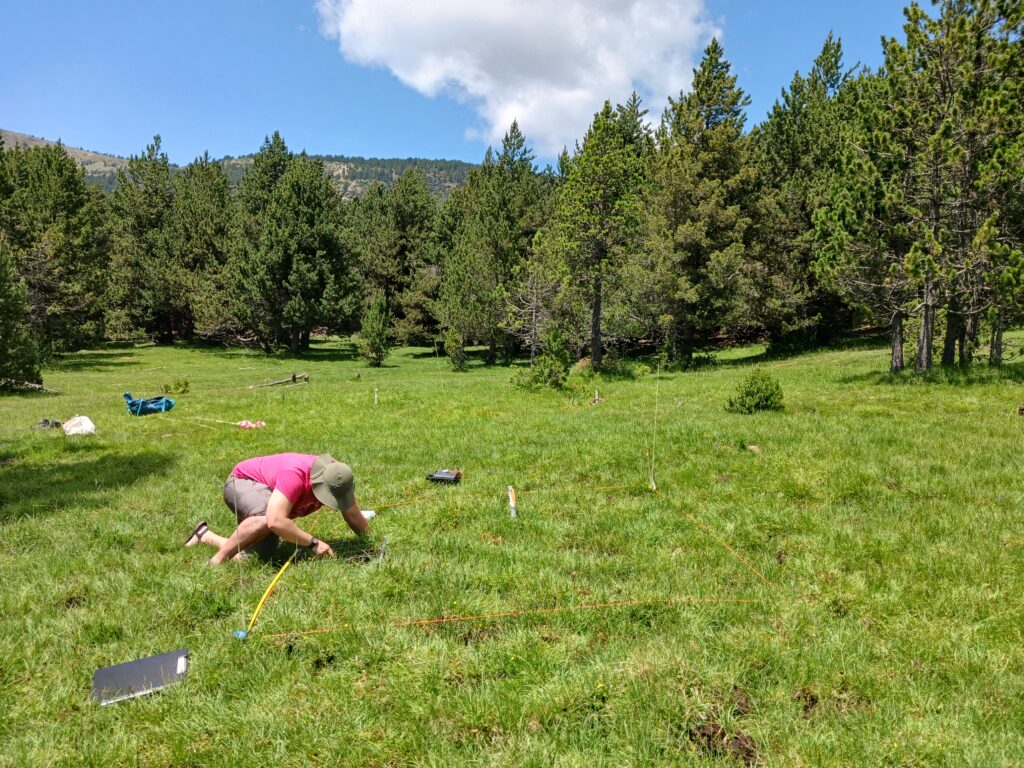
Finally, grass mowing has been reinstated in two valley-bottom areas where hay meadows, red fescue meadows, and mires intermingle. These areas include part of Planes de Son (Aigüestortes SAC) and the lower section of the Pleta de Molières (Aran). Mowing has been carried out annually and consecutively since 2023.
In all mires, bryophyte samples have been collected for later identification in the laboratory. Plant biodiversity inventories have been updated in all monitoring plots, accompanied by the recording of environmental variables such as groundwater level, pH, electrical conductivity, and others. All data collection campaigns were conducted during June and July.
These data will be essential for comparing them with soil microeukaryote biodiversity and for studying changes in the conservation status of these mires following the improvement actions.
In addition to mires, scientific monitoring has also continued in the high-mountain lakes were the restoration activities are being carried out. The sampling includes physico-chemical parameters (temperature, conductivity, alkalinity, and concentrations of dissolved nutrients such as nitrates and phosphates), biological indicators (phytoplankton, zooplankton, and macroinvertebrates), and the collection of samples for genetic analyses. Likewise, monitoring of bats (mainly through acoustic recordings) and semi-aquatic insectivores has been conducted (in situ surveys and the collection of droppings and other signs).