


Researcher Teresa Buchaca (CEAB-CSIC) took part in a new session of the Itinerarios Cicerón programme, where she presented the actions of the LIFE RESQUE ALPYR project as a successful case of ecological restoration in high mountain lakes. She highlighted their value as natural laboratories for understanding the impacts of global change.
On 6 May, the Pyrenean Institute of Ecology (IPE-CSIC) in Jaca (Aragón) hosted a new session of the Itinerarios Cicerón, an initiative launched by the Spanish National Research Council (CSIC) to bridge scientific knowledge with society and to promote evidence-based decision-making. This edition focused on biodiversity recovery and science-based actions for nature restoration.
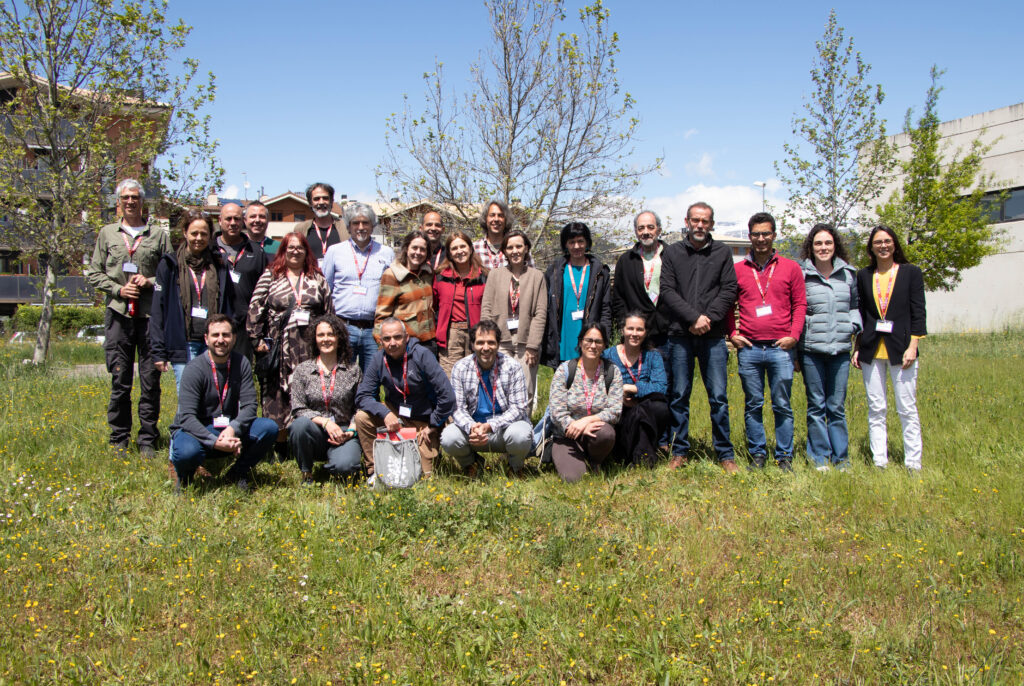
Teresa Buchaca, researcher at the Centre for Advanced Studies of Blanes (CEAB-CSIC), contributed as an expert in high mountain aquatic ecosystems, which are central to the LIFE RESQUE ALPYR project. In her talk, she explained that high mountain lakes function as true natural laboratories, as they allow researchers to track human impacts over time through palaeoecological analysis. This historical perspective is key to understanding ecosystem changes and planning more effective restoration measures.
As a successful example, Buchaca presented LIFE RESQUE ALPYR, a project aimed at restoring the ecological functionality of mountain lakes in the Pyrenees. She outlined actions such as removal of invasive species and the restoration of natural cycles, which have shown proven effectiveness and are based on the scientific knowledge generated at CEAB-CSIC and by the project’s partner institutions.
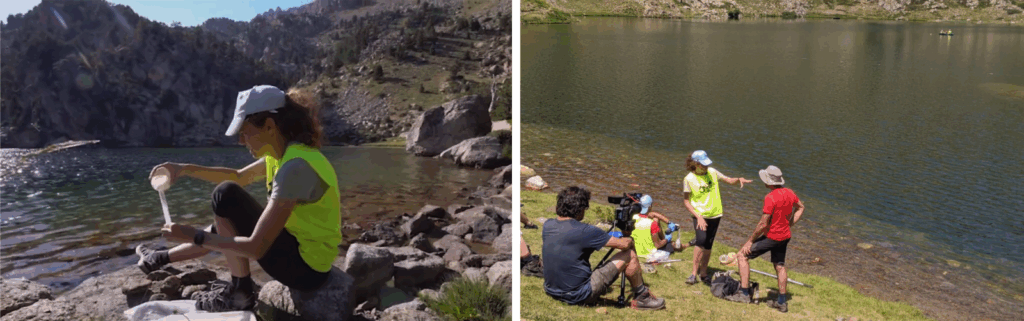
The event also featured CEAB researchers Jordi Pagès and Daniel Oro, who shared their insights on the restoration of coastal and delta ecosystems. In addition, pre-recorded videos were shown, offering a glimpse into the researchers’ work in the lab and in the field.
The session brought together scientists from various CSIC centres, nature reserve managers, public authorities, civil society organisations, businesses, and journalists. Coordinated by Graciela Gil-Romera (IPE-CSIC) and Óscar Godoy (EBD-CSIC), the organisers emphasised that nature restoration is an ecological imperative, and can only be successful if grounded in robust and applicable scientific knowledge.
The Itinerarios Cicerón initiative aims to connect research teams working on similar topics and to translate their findings into practical knowledge for society, helping to effectively address today’s environmental challenges.
More information is available at this link.
